
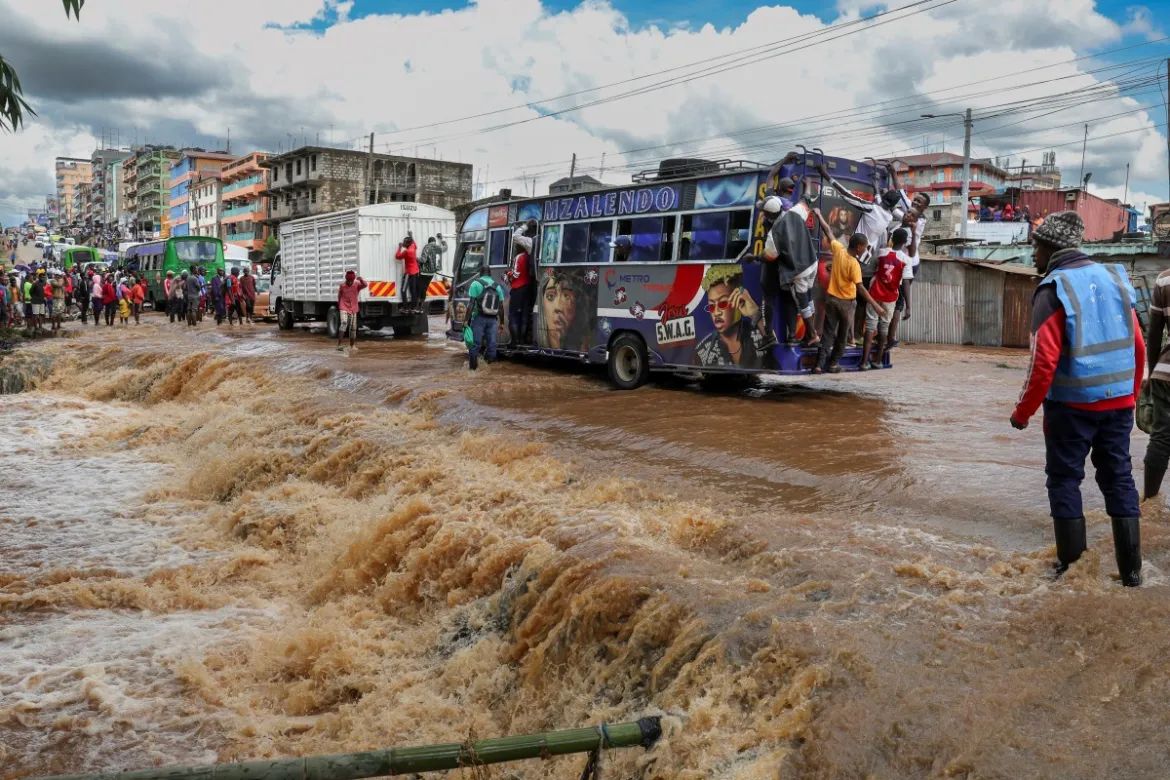
NAIROBI, Kenya — The number of people who have died following devastating floods caused by heavy rains across the country has risen to 42, according to authorities, with Nairobi recording the highest number of casualties as flash floods swept through homes, roads, and informal settlements.
Officials say the intense rainfall began late last week, overwhelming drainage systems and rivers in several counties. The floods have left a trail of destruction, destroying homes, displacing thousands of families, and disrupting transport in major urban centres.
The government has since activated emergency response teams as rescue operations continue in several affected areas.
Nairobi Among the Worst-Hit Areas
Authorities report that Nairobi County recorded the highest number of deaths, accounting for more than half of the total fatalities reported nationwide.
Flash floods in several estates and informal settlements trapped residents in their homes and swept away vehicles along flooded roads. Emergency responders have been working around the clock to recover bodies and rescue stranded residents.
Several roads in the capital were rendered impassable after drainage systems overflowed following hours of heavy rainfall. Motorists were stranded in different parts of the city, while businesses were forced to close due to flooding.
County officials warned residents living in low-lying areas and near riverbanks to move to safer ground as water levels continued to rise in several locations.
Rising Number of Displaced Families
Apart from the confirmed deaths, thousands of families have been displaced after floodwaters submerged homes and destroyed property in multiple counties.
Relief agencies estimate that more than 50,000 people have been affected by the floods, with many forced to seek temporary shelter in schools, churches, and community centres.
In some rural areas, farms and livestock have also been lost after rivers burst their banks and flooded agricultural land. The destruction is expected to have a negative impact on food security if the rains continue in the coming weeks.
Local authorities and humanitarian organisations are currently distributing emergency supplies including food, blankets, and clean drinking water to affected families.
Rescue and Emergency Operations Intensify
The national government has deployed multi-agency rescue teams to support local authorities in responding to the disaster.
Personnel from the police, disaster management units, and humanitarian organisations have been conducting rescue operations in flooded neighbourhoods and along major roads affected by flash floods.
Search operations are also ongoing for several people who are still reported missing after being swept away by fast-moving floodwaters.
Emergency responders have urged residents to avoid attempting to cross flooded roads and rivers, warning that strong currents can easily sweep away pedestrians and vehicles.
Government Pledges Support for Victims
President William Ruto has assured affected families that the government will provide support to those impacted by the floods.
The government announced that it will cover hospital expenses for those injured and assist families in meeting funeral costs for victims who lost their lives in the disaster.
Authorities have also begun distributing relief food from the national strategic grain reserves to communities that have been severely affected by the floods.
Officials said the government will continue monitoring the situation closely and coordinate with county governments to ensure timely humanitarian assistance reaches affected households.
Weather Experts Warn of More Rain
The Kenya Meteorological Department has warned that the country may continue experiencing heavy rainfall in the coming days, raising concerns that the situation could worsen in already affected regions.
Meteorologists have advised residents living in flood-prone areas, especially those near rivers and drainage channels, to remain alert and relocate to safer areas where necessary.
Experts say the ongoing rains are part of Kenya’s seasonal weather patterns, but climate variability has increasingly contributed to more intense and unpredictable rainfall, raising the risk of floods in urban and rural areas alike.
Calls for Improved Drainage and Urban Planning
The latest flooding disaster has once again raised concerns about urban planning and drainage infrastructure, particularly in rapidly growing cities such as Nairobi.
Urban planners and environmental experts argue that poor drainage systems, encroachment on riparian land, and unplanned settlements have significantly increased the risk of flooding during heavy rains.
Residents in several affected neighbourhoods have called on authorities to improve drainage infrastructure and enforce regulations preventing construction along waterways.
As rescue and recovery operations continue, authorities are urging Kenyans to stay informed through official weather advisories and avoid travelling through flooded areas.
With more rain forecast in the coming days, emergency teams remain on high alert as the country grapples with the impact of one of the latest deadly flood disasters.