
The United States economy is generating mixed signals as policymakers, markets, and international partners respond to shifting domestic growth indicators and evolving trade dynamics. Recent government data shows the economic landscape remains under pressure from trade imbalances, labour market challenges, diplomatic negotiations and legislative actions affecting tariff regimes and bilateral agreements.
Economic Growth and Consumer Activity
In the latest official release, U.S. Commerce Secretary Howard Lutnick said the U.S. dollar is now at what he described as a “more natural” level for trade, after recent weakness helped boost export competitiveness. He projected gross domestic product (GDP) growth for the fourth quarter of 2025 exceeding 5 per cent, with potential for even stronger performance in early 2026. Despite these optimistic pockets, economic performance remains uneven.
Consumer demand data shows flat retail sales for December 2025, suggesting spending growth stalled at the end of last year. This trend, combined with slower labour market expansion, underscores persistent hesitancy among households and businesses alike.
Labour Market and Jobs Report
Economists are bracing for the release of delayed U.S. employment figures, which were postponed due to a recent federal funding gap. Preliminary forecasts suggest modest job creation, with an expected increase of about 55,000 jobs in January 2026 — a marked slowdown compared with historical averages. The U.S. unemployment rate is reported near 4.4 per cent, reflecting a still-tight labour market but slower momentum in job growth.
The slower pace has been linked to stricter immigration policies, automation trends and broader economic uncertainty. Analysts caution that subdued hiring patterns may signal deeper structural shifts in the workforce, potentially complicating consumer confidence and long-term growth prospects.
Trade Deficit and International Commerce
Recent data from the U.S. Bureau of Economic Analysis shows that the goods and services trade deficit widened sharply in November 2025, rising to approximately $56.8 billion — nearly double the previous month’s gap. Exports declined while imports surged, adding significant downward pressure on headline GDP figures and highlighting enduring trade imbalances that policymakers must confront.
The persistent trade deficit underscores long-standing structural challenges, including strong domestic demand for foreign goods and competitive pressures from global producers. This backdrop has complicated efforts to rebalance trade flows even as the federal government touts export-friendly currency adjustments.
Trade Policy and Bilateral Relations
U.S.–India Trade Deal Adjustments
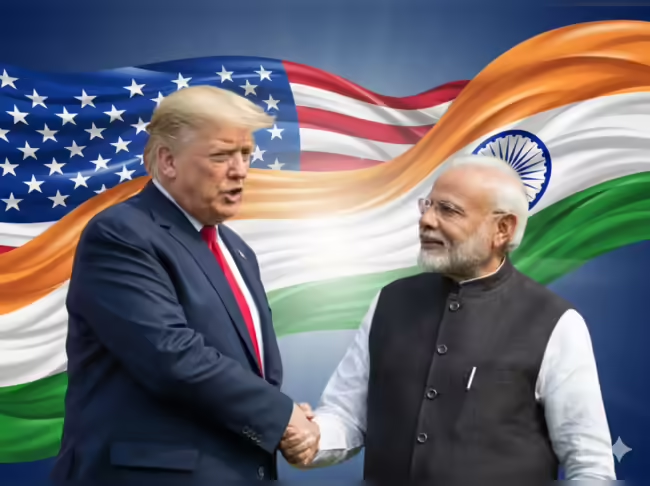
In a major diplomatic and economic shift, the White House revised the interim U.S.–India trade deal fact sheet, adjusting key terms that impact tariffs and market access for agricultural and industrial products. These changes reflect continued negotiation and strategic alignment aimed at boosting bilateral trade volumes and addressing long-standing market barriers.
Economists remain cautious about India’s ambitious pledge to import $500 billion in U.S. goods over the next five years. While this target signals intensified cooperation, some experts warn that achieving such a volume will require substantial policy shifts and structural reforms in both markets.
As part of the trade discussions, India has also agreed to end its digital services tax and lower tariffs on U.S. industrial and agricultural goods, moves likely to deepen commercial engagements between the two nations.
U.S. Tariff Debates and Congressional Action
In Washington, the U.S. House of Representatives rejected a bid to extend restrictions on tariff challenges, marking a political setback for trade policy proponents and opening debate on potential rollback measures. The vote could signal rising bipartisan discomfort with broad tariff regimes that some lawmakers argue act as de-facto taxes on American businesses and consumers.
Advocates for change are pushing for votes to end tariffs on key partners such as Canada and Mexico, although any such moves would require Senate approval and presidential assent — steps that could reshape regional trade frameworks if successful.
Wider Global Context
U.S. economic policy and trade tensions remain a key focus of global economic observers. While the U.S. pursues strategic alliances and tariff adjustments, markets continue to price in uncertainties around inflation, geopolitical risk and supply chain realignment. Trade measures adopted by the U.S. have ripple effects across international markets, with implications for global growth and investment flows.
Conclusion
The U.S. economic and trade outlook in early 2026 shows a complex picture: growth prospects tempered by uneven consumer and labour dynamics, a sharp trade deficit, and evolving diplomatic engagements that could redefine key bilateral relationships. As policymakers grapple with domestic pressures and international expectations, the trajectory of future growth will hinge on successful negotiation of trade challenges and structural economic reforms.

